

U.S.-Iran Tensions Escalate as Hormuz Dispute Deepens; Trump Says No Talks Are Planned
INFLOWIRE | International News | August 18, 2026
Tensions between the United States and Iran remain high as diplomatic efforts appear to have stalled and the dispute over the strategic Strait of Hormuz continues to threaten regional stability and global energy markets.
On Tuesday, August 18, President Donald Trump said that there were no U.S.-Iran negotiations currently taking place and no talks were scheduled, while Iran maintained that the Strait of Hormuz would remain closed until Washington meets a series of conditions. The conflicting positions underscore the widening gap between the two sides as efforts to reach a broader agreement remain uncertain.
Strait of Hormuz Becomes the Central Flashpoint
The Strait of Hormuz has emerged as one of the most important issues in the current U.S.-Iran confrontation.
Iran says the waterway will remain closed until the United States meets conditions that Tehran has linked to an interim agreement. According to Reuters, Iranian negotiator Mohammad Baqer Qalibaf said those conditions include lifting the blockade on Iranian ports, removing oil sanctions, releasing frozen Iranian assets and stopping U.S. military threats and operations.
The situation is particularly significant because the Strait of Hormuz is a critical route for global energy shipments. Any prolonged disruption could affect crude oil supplies, tanker traffic, shipping insurance costs and energy prices far beyond the Middle East.
However, there is a major dispute over the current status of the waterway.
Trump has said that the Strait is open and operating, while Iranian officials have continued to describe it as closed until their demands are addressed. Independent reporting has also indicated that commercial traffic through the area remains significantly reduced.
U.S.-Iran Negotiations Face a Major Setback
The latest development represents another setback for diplomatic efforts.
Earlier in August, Trump had indicated that new negotiations with Iran could begin and described an agreement as potentially within reach. Those efforts have since failed to produce a publicly announced comprehensive settlement.
A 60-day negotiation period connected to an earlier interim understanding has now expired without a final agreement. Reports indicate that the two sides remain divided over the Strait of Hormuz, sanctions, Iran's nuclear program and broader security issues.
The collapse or suspension of talks increases uncertainty over what comes next.
Diplomatic channels remain important because the alternative could be a longer period of military confrontation, economic pressure and disruption to international shipping.
Trump Takes a Tougher Position
Trump has continued to use strong language toward Iran while emphasizing that Washington does not want to rush into a settlement.
On August 18, reports said Trump again ruled out scheduled negotiations with Tehran. At the same time, his administration has continued to closely monitor developments involving the Strait of Hormuz and the wider Persian Gulf.
Trump has also criticized Oman's role in efforts to reach an arrangement involving Iran and shipping through the Strait. The issue has added another layer of tension because Oman has historically played an important role in regional diplomacy and communication between the United States and Iran.
Iran Signals It Will Not Accept a Settlement on U.S. Terms Alone
Iran has indicated that it remains willing to engage diplomatically but is demanding significant changes to the current U.S. pressure campaign.
Tehran's position is that sanctions, military pressure and restrictions affecting Iranian ports and assets must be addressed before the Strait of Hormuz can return to normal operations.
Iranian officials have also rejected the idea that negotiations should amount to surrender. The government in Tehran has instead emphasized what it describes as national sovereignty and security interests.
The opposing positions make a quick breakthrough difficult.
Oil Markets Are Watching Closely
The U.S.-Iran confrontation is already having implications for energy markets.
The Strait of Hormuz is one of the world's most important energy shipping routes. Prolonged disruption could raise concerns about crude oil availability and increase the risk premium built into global oil prices.
Reuters reported that Brent crude prices had risen sharply amid renewed concerns surrounding the conflict and the Strait.
For American consumers, higher global crude prices can eventually translate into higher gasoline and transportation costs.
The economic impact would not necessarily be limited to the United States. Countries in Europe and Asia that rely heavily on imported energy could also face higher costs if shipping disruptions continue.
Shipping Traffic Remains a Major Concern
Even though Washington and Tehran disagree over whether the Strait is technically open, shipping activity remains a major concern.
Reports indicate that commercial traffic has fallen considerably as shipping companies assess the security risks associated with the waterway.
A vessel was also reportedly hit by a projectile in the region, further increasing concerns among commercial operators.
For shipping companies, the issue is not simply whether a route is legally or technically open. The bigger question is whether vessels can safely pass through the area at commercially acceptable levels of risk.
What Happens Next?
The immediate future of the U.S.-Iran confrontation remains uncertain.
There are several possible scenarios.
First, diplomacy could restart. Oman and other regional governments may continue working to establish a framework that allows shipping through the Strait while creating a path toward broader U.S.-Iran negotiations.
Second, the current standoff could continue. If Washington and Tehran maintain their opposing positions, the Strait could remain heavily restricted and energy markets could face prolonged uncertainty.
Third, military tensions could increase. A new incident involving U.S., Iranian or commercial vessels could rapidly complicate diplomatic efforts and increase the risk of a wider regional confrontation.
The most significant factor will be whether the United States and Iran can find a temporary arrangement on the Strait that allows both sides to return to broader negotiations.
Why the U.S.-Iran Conflict Matters to Americans
For Americans, the conflict is not only a foreign-policy issue.
A prolonged disruption in the Persian Gulf could affect:
- Gasoline prices
- Crude oil prices
- Shipping costs
- Inflation
- Airline and transportation expenses
- Global financial markets
- U.S. military spending
- Supply chains
- Consumer prices
Energy prices are particularly important because oil affects transportation, manufacturing and the cost of moving goods across the economy.
If the disruption becomes prolonged, markets could begin pricing in a larger and more permanent geopolitical risk premium.
The Bigger Nuclear Question
The Strait of Hormuz is only one part of the larger U.S.-Iran dispute.
Iran's nuclear program remains a central issue in Washington's policy toward Tehran. The United States has repeatedly emphasized that Iran should not obtain a nuclear weapon, while Tehran has maintained its own positions regarding its nuclear activities and national sovereignty.
Previous diplomatic efforts have attempted to connect nuclear restrictions with sanctions relief and broader security arrangements.
A sustainable agreement would therefore likely require progress on more than just shipping through the Strait.
Bottom Line
As of August 18, 2026, there is no clear sign of an imminent comprehensive U.S.-Iran peace agreement.
President Trump says there are currently no talks scheduled with Iran, while Tehran continues to condition the reopening of the Strait of Hormuz on U.S. concessions. Meanwhile, regional diplomatic efforts involving Oman remain an important potential channel for de-escalation.
The situation remains fluid, and developments around the Strait of Hormuz could have consequences well beyond the Middle East.
For the United States, the biggest immediate concerns are the possibility of higher energy prices, continued geopolitical uncertainty and the risk that a prolonged confrontation could further disrupt global trade.
Source Note: This report is based on current reporting from Reuters, Associated Press and other publicly available sources. Because the U.S. and Iranian governments are making conflicting statements about the status of the Strait of Hormuz and diplomatic contacts, disputed claims have been clearly attributed rather than presented as independently verified facts
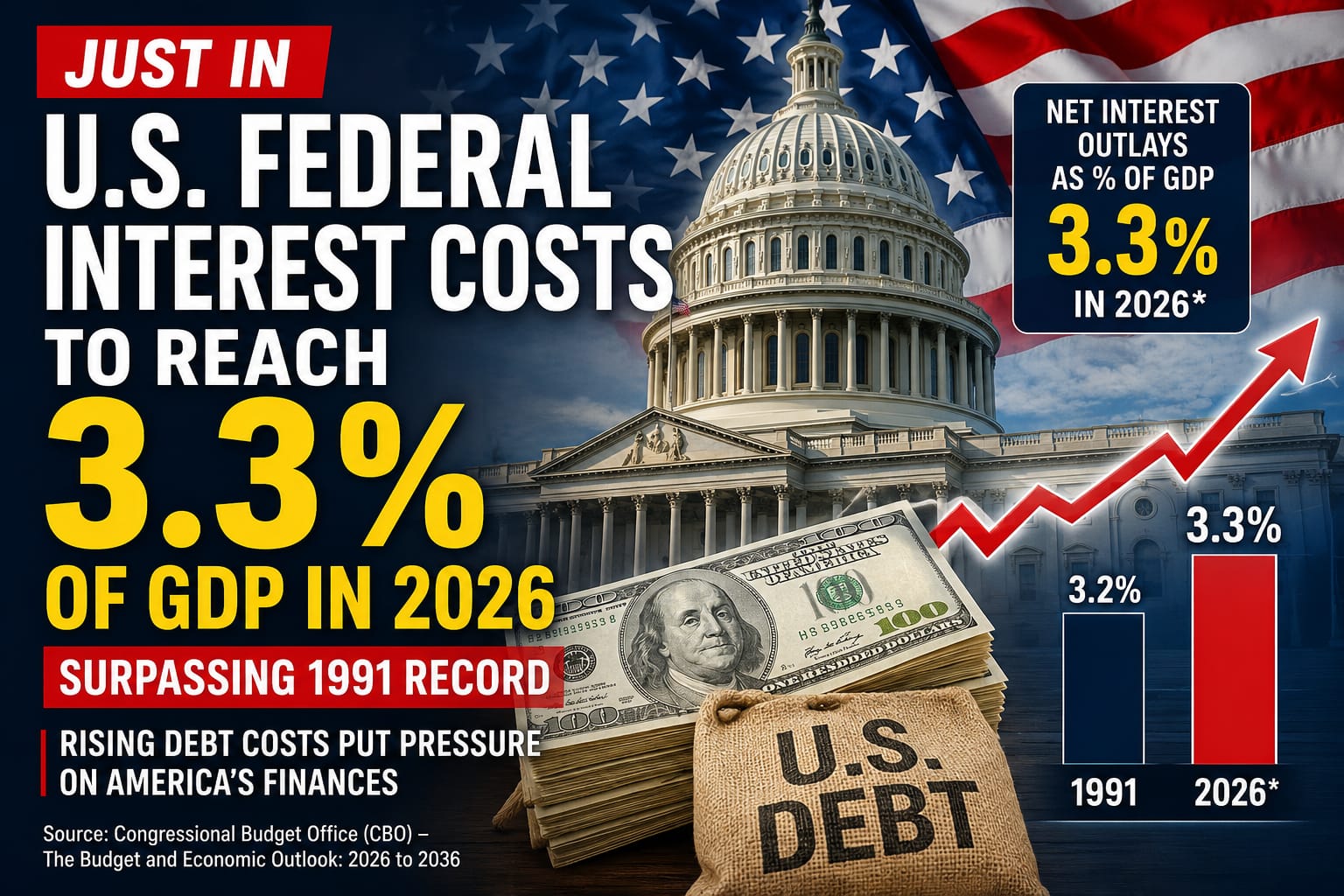
U.S. Federal Interest Costs Expected to Hit Record 3.3% of GDP in 2026
INFLOWIRE | 18 August 2026
The cost of servicing the U.S. federal debt is expected to reach a historic level in 2026, putting additional pressure on the country’s finances.
According to the Congressional Budget Office (CBO), net interest outlays are projected to reach approximately $1 trillion in fiscal year 2026, equivalent to about 3.3% of U.S. GDP.
Interest Costs Set to Surpass 1991 Level
The projected 3.3% of GDP would exceed the previous high of around 3.2% recorded in 1991, highlighting the growing financial burden associated with the federal government's debt.
The increase comes as the United States continues to carry a large federal debt balance while interest rates remain significantly higher than they were during much of the previous decade.
Why Are U.S. Interest Costs Rising?
Federal interest expenses are influenced by two major factors: the amount of government debt outstanding and the interest rates paid on that debt.
As older Treasury securities mature, the government must refinance them. When refinancing occurs at higher interest rates, the cost of servicing the debt can increase even if the amount of debt does not change significantly.
The combination of persistent federal deficits, a growing debt balance and higher borrowing costs is therefore placing greater pressure on the federal budget.
Debt and Deficit Remain Major Fiscal Challenges
The CBO projects that the U.S. federal budget deficit will remain substantial in the coming years. Federal debt held by the public is also expected to remain around historically elevated levels relative to the size of the U.S. economy.
Higher interest payments can reduce the amount of federal revenue available for other government priorities and can make efforts to reduce future deficits more difficult.
Interest Costs Could Rise Further
The CBO's long-term projections indicate that federal net interest costs could continue increasing over the next decade.
Under the CBO's baseline projections, net interest outlays are expected to rise from roughly $1 trillion in 2026 to about $2.1 trillion by 2036. As a share of GDP, net interest costs are projected to increase to approximately 4.6% of GDP by 2036.
What Does This Mean for the U.S. Economy?
Rising interest costs do not automatically mean that the U.S. economy is facing an immediate crisis. However, they represent an increasingly important fiscal challenge.
If interest payments continue to consume a larger share of federal resources, policymakers may face difficult choices involving government spending, taxation, borrowing and deficit reduction.
For financial markets, the trajectory of U.S. debt and Treasury borrowing costs will remain important factors to watch.