U.S. Federal Interest Costs Expected to Hit Record 3.3% of GDP in 2026
INFLOWIRE | U.S. Economy | 18 August 2026
The cost of servicing the U.S. federal debt is expected to reach a historic level in 2026, putting additional pressure on the country’s finances.
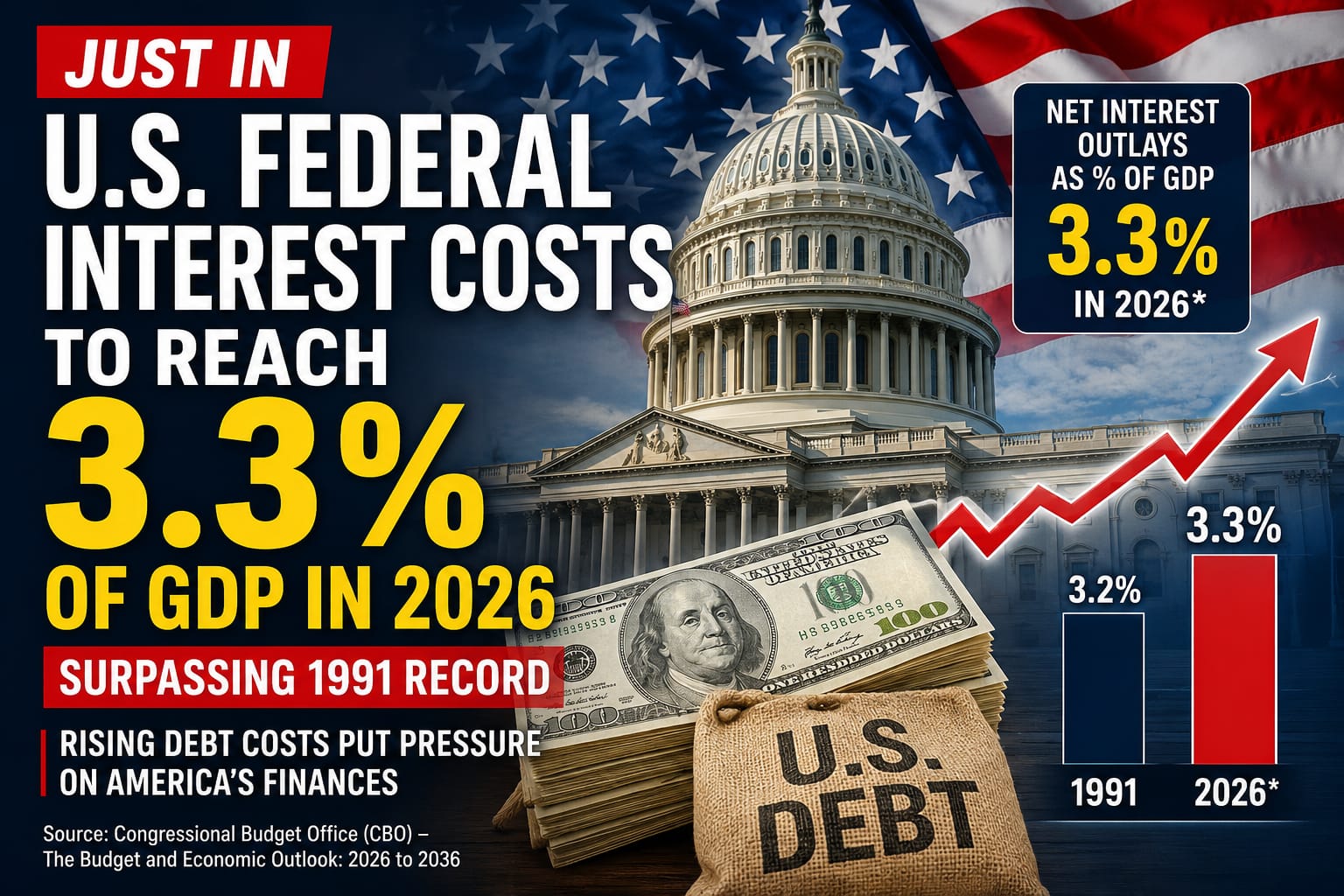
According to the Congressional Budget Office (CBO), net interest outlays are projected to reach approximately $1 trillion in fiscal year 2026, equivalent to about 3.3% of U.S. GDP.
Interest Costs Set to Surpass 1991 Level
The projected 3.3% of GDP would exceed the previous high of around 3.2% recorded in 1991, highlighting the growing financial burden associated with the federal government's debt.
The increase comes as the United States continues to carry a large federal debt balance while interest rates remain significantly higher than they were during much of the previous decade.
Why Are U.S. Interest Costs Rising?
Federal interest expenses are influenced by two major factors: the amount of government debt outstanding and the interest rates paid on that debt.
As older Treasury securities mature, the government must refinance them. When refinancing occurs at higher interest rates, the cost of servicing the debt can increase even if the amount of debt does not change significantly.
The combination of persistent federal deficits, a growing debt balance and higher borrowing costs is therefore placing greater pressure on the federal budget.
Debt and Deficit Remain Major Fiscal Challenges
The CBO projects that the U.S. federal budget deficit will remain substantial in the coming years. Federal debt held by the public is also expected to remain around historically elevated levels relative to the size of the U.S. economy.
Higher interest payments can reduce the amount of federal revenue available for other government priorities and can make efforts to reduce future deficits more difficult.
Interest Costs Could Rise Further
The CBO's long-term projections indicate that federal net interest costs could continue increasing over the next decade.
Under the CBO's baseline projections, net interest outlays are expected to rise from roughly $1 trillion in 2026 to about $2.1 trillion by 2036. As a share of GDP, net interest costs are projected to increase to approximately 4.6% of GDP by 2036.
What Does This Mean for the U.S. Economy?
Rising interest costs do not automatically mean that the U.S. economy is facing an immediate crisis. However, they represent an increasingly important fiscal challenge.
If interest payments continue to consume a larger share of federal resources, policymakers may face difficult choices involving government spending, taxation, borrowing and deficit reduction.
For financial markets, the trajectory of U.S. debt and Treasury borrowing costs will remain important factors to watch.
Source: Congressional Budget Office (CBO), The Budget and Economic Outlook: 2026 to 2036.